

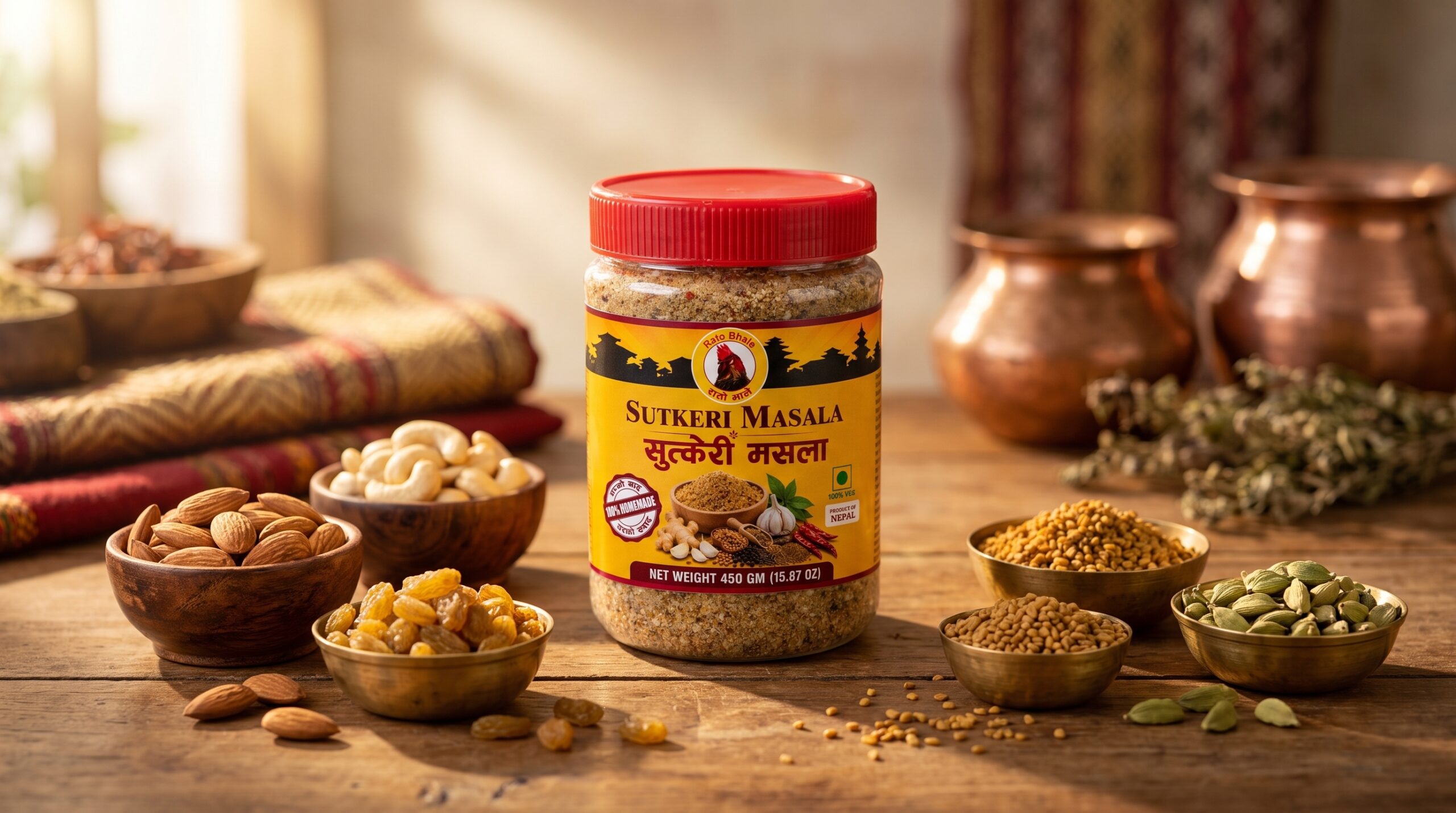
In Nepal, the period following childbirth has traditionally been a time of rest, nourishment and special care for new mothers. Families have passed down special recipes designed to provide energy and nourishment during this important stage of life.
One of the best-known traditional foods associated with this period is Sutkeri Masala (सुत्केरी मसला).
Sutkeri Masala is a traditional Nepali postpartum food prepared using a rich combination of ingredients such as nuts, dried fruits, ghee, edible gum, milk solids, sweeteners, herbs and spices. Recipes vary between families and communities, but the purpose remains closely connected to the traditional practice of nourishing and caring for mothers after childbirth.
For many Nepali families, Sutkeri Masala is more than just a food. It is a part of Nepal’s culinary heritage and a tradition of showing care to a new mother.
What Is Sutkeri Masala?
Sutkeri Masala is a traditional Nepali postpartum food made from a combination of nutrient-rich ingredients, herbs, spices, nuts and sweeteners.
The exact recipe can differ from one household to another. Traditional preparations may contain:
- Almonds
- Cashews
- Walnuts
- Coconut
- Dried fruits
- Ghee
- Edible gum (gond)
- Khuwa or milk solids
- Jaggery (gud) or rock sugar
- Fenugreek
- Fennel
- Ajwain
- Battisa
- Thulo Okhati
- Other traditional herbs and spices
This combination gives Sutkeri Masala its distinctive aroma, rich taste and dense texture.
Why Is Sutkeri Masala Traditionally Given After Childbirth?
The postpartum period is an important time for a mother’s recovery and nourishment. Traditional Nepali households have long placed special emphasis on providing new mothers with nutritious and energy-rich foods.
Sutkeri Masala fits into this tradition.
Ingredients such as nuts, dried fruits, ghee and milk solids make many traditional versions of Sutkeri Masala particularly energy-dense. Herbs and spices also contribute to its distinctive flavour and traditional character.
For generations, families have prepared Sutkeri Masala as part of a broader tradition of caring for mothers after childbirth.
Traditional Ingredients in Sutkeri Masala
Nuts and Dried Fruits
Almonds, cashews, walnuts, coconut, dates and other dried fruits are commonly found in different versions of Sutkeri Masala.
These ingredients contribute energy, protein, fats, fibre and various nutrients to the preparation.
Ghee
Ghee is an important ingredient in many traditional Sutkeri Masala recipes.
It provides richness and energy while helping bring the different ingredients together into the finished preparation.
Edible Gum (Gond)
Edible gum, commonly known as gond, is traditionally used in many South Asian preparations.
When combined with ghee and other ingredients, it contributes to the texture of the finished Sutkeri Masala.
Battisa and Traditional Herbs
Traditional versions of Sutkeri Masala may contain herbal blends such as Battisa, along with ingredients such as Thulo Okhati, fenugreek, fennel and ajwain.
The exact ingredients and proportions can vary depending on the traditional recipe being followed.
Khuwa and Milk Solids
Some recipes contain khuwa, or thickened milk solids.
Khuwa contributes richness and helps create the dense consistency associated with some traditional versions of Sutkeri Masala.
Jaggery or Rock Sugar
Jaggery, commonly called gud, or rock sugar such as misri may be used to add sweetness.
The amount and type of sweetener varies between recipes.
Traditional Uses of Sutkeri Masala
Sutkeri Masala has traditionally been valued as an energy-rich food during the postpartum period.
Its combination of nuts, dried fruits, ghee, milk solids, herbs and spices makes it a substantial traditional food that can be enjoyed as part of a varied diet.
Some traditional recipes also contain fenugreek and fennel, which have historically been associated with breastfeeding and lactation support.
However, Sutkeri Masala should be considered a traditional food rather than a medical treatment. Individual ingredients may have been traditionally used for different purposes, but nutritional and medical needs vary from one mother to another.
New mothers who have concerns about breastfeeding, nutrition, allergies or their recovery should consult a qualified healthcare professional.
How Is Sutkeri Masala Traditionally Consumed?
Sutkeri Masala can be enjoyed in different ways depending on the recipe and personal preference.
Eaten Directly
A small portion can be eaten directly as a rich, soft food.
Mixed With Warm Milk
Some traditional preparations can be mixed with warm milk to create a softer and richer preparation.
Enjoyed as a Snack
It can also be consumed as part of a meal or snack during the postpartum period.
The appropriate serving size depends on the specific product formulation and individual dietary needs. Always follow the serving instructions provided on the product packaging.
Sutkeri Masala and Nepali Culture
One of the most special aspects of Sutkeri Masala is its connection to Nepali family traditions.
In many households, childbirth has traditionally been followed by a period in which the mother receives additional rest, care and specially prepared foods.
Mothers, grandmothers and other family members have passed down recipes from one generation to the next.
Sutkeri Masala is part of this tradition.
The ingredients may differ from one family to another, but the message behind the food remains the same:
Take care of the mother while she cares for the newborn.
Traditional Food for Nepali Families Around the World
Today, Nepali families live across the world, from the United States and Canada to Australia, the United Kingdom and many other countries.
For families living outside Nepal, traditional foods can provide a meaningful connection to home and heritage.
Sutkeri Masala allows a traditional Nepali postpartum food tradition to continue in a convenient form while preserving the flavours and ingredients associated with the preparation.
Rato Bhale Sutkeri Masala
Rato Bhale Sutkeri Masala brings the traditional idea of Nepali Sutkeri Masala into a convenient packaged format.
Prepared as part of Rato Bhale’s range of traditional Nepali foods, it is designed for families who appreciate the flavours and food traditions passed down through generations.
From traditional spices and grains to snacks and heritage foods, Rato Bhale is committed to sharing the Original Taste of Nepal with Nepali communities around the world.
Frequently Asked Questions About Sutkeri Masala
What is Sutkeri Masala?
Sutkeri Masala is a traditional Nepali postpartum food prepared using ingredients such as nuts, dried fruits, ghee, edible gum, milk solids, herbs, spices and sweeteners.
Why is Sutkeri Masala traditionally eaten after childbirth?
It has traditionally been given to new mothers as part of a nourishing and energy-rich postpartum diet.
Does Sutkeri Masala increase breast milk?
Some traditional Sutkeri Masala recipes contain ingredients such as fenugreek and fennel that have traditionally been associated with lactation. However, Sutkeri Masala should not be considered a guaranteed treatment for low milk supply.
What ingredients are found in Sutkeri Masala?
Ingredients vary by recipe, but traditional versions may include nuts, dried fruits, ghee, edible gum, khuwa, jaggery or rock sugar, fenugreek, fennel, ajwain, Battisa and other herbs and spices.
How do you eat Sutkeri Masala?
Depending on the formulation, Sutkeri Masala can be eaten directly or mixed with warm milk. Always follow the serving instructions on the product packaging.
Is Sutkeri Masala a traditional Nepali food?
Yes. Sutkeri Masala is strongly associated with traditional Nepali postpartum food culture, although similar postpartum foods are also found in other South Asian cultures.
Preserving a Taste of Nepal
Sutkeri Masala is more than a combination of nuts, herbs, spices and other ingredients.
It represents a tradition of nourishment, family care and Nepali culinary heritage.
As Nepali families continue to live around the world, traditional foods help preserve the connection between generations and cultures.
At Rato Bhale, we believe that the traditional foods of Nepal deserve to be preserved, shared and enjoyed wherever Nepali families call home.
Rato Bhale — Original Taste of Nepal.
Disclaimer: This article is intended for general educational and cultural information and is not medical advice. Sutkeri Masala is a traditional food and should not be considered a treatment or replacement for professional medical care. Postpartum nutritional needs vary from person to person. New mothers with medical conditions, allergies, dietary restrictions or concerns about breastfeeding should consult a qualified healthcare professional.
Talk to Our Trade Expert
Get personalized guidance on sourcing, pricing, and export logistics from our experienced trade specialists.
Schedule a Free Consultation