Pitho refers to flour in English. If you have ever come across the Nepali word Pitho while exploring traditional Nepali food, you may wonder what it means. In simple terms, Pitho means flour. It generally refers to grains, cereals, pulses, or other ingredients that have been ground into a fine powder for cooking.
However, Nepali cuisine includes many different types of Pitho, each made from a different grain or ingredient. From Kodo Ko Pitho and Fapar Ko Pitho to Makai Ko Pitho, traditional Nepali flours play an important role in everyday meals and regional cuisine.
This guide explains the meaning of Pitho in English, introduces common Nepali flour names, and explores how different types of Pitho are traditionally used.
Pitho Meaning in English: What Does Pitho Mean?
Pitho means flour in English. In Nepali, the word is commonly used to describe grains, cereals, pulses, or other ingredients that have been ground into a fine powder and prepared for cooking.
The exact English name depends on the ingredient used to make the flour. For example:
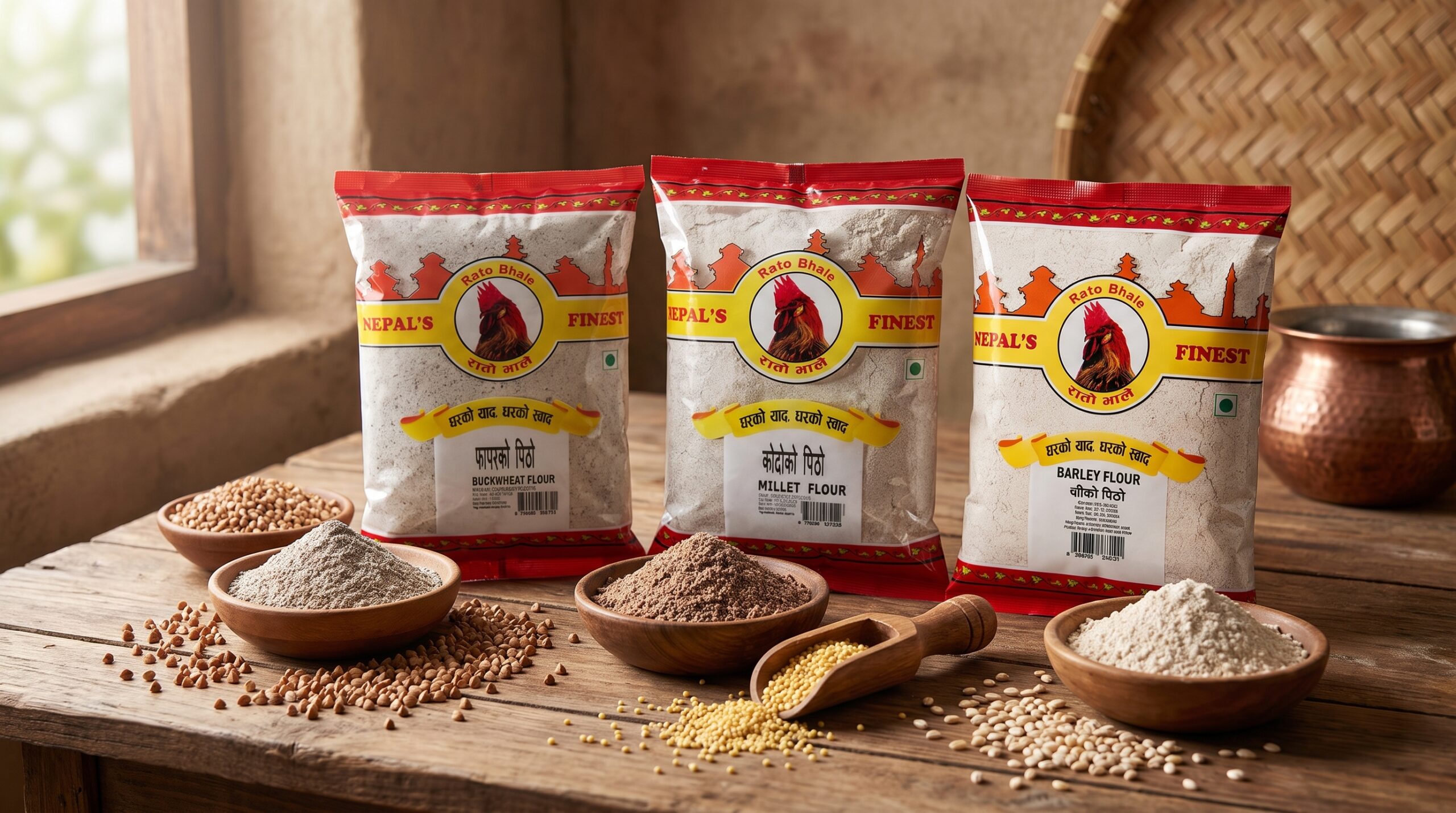
- Kodo Ko Pitho = Millet Flour
- Fapar Ko Pitho = Buckwheat Flour
- Makai Ko Pitho = Corn Flour
- Jau Ko Pitho = Barley Flour
- Gahu Ko Pitho = Wheat Flour
Because different grains are used throughout Nepal, Pitho can refer to many different varieties of flour.
What Is Pitho in Nepali Cuisine?
Understanding the meaning of Pitho in English is also about understanding its importance in Nepali cuisine. Pitho has been an important part of Nepali cooking for generations. Different regions of Nepal traditionally use different grains depending on the climate, agriculture, and local food culture.
In mountainous and hilly regions, grains such as millet and buckwheat have traditionally been important ingredients. In other regions, wheat, maize, and barley are commonly used.
These grains are cleaned and ground into flour, which can then be used to prepare a variety of traditional foods.
Some popular dishes made using Pitho include:
- Dhindo
- Roti
- Porridge
- Sel Roti preparations
- Traditional breads
- Regional and ethnic Nepali dishes
Common Nepali Pitho Names and Their English Meanings
Nepal has a rich variety of traditional flours. Below are some commonly used Nepali Pitho names and their English equivalents.
Kodo Ko Pitho — Millet Flour
Kodo Ko Pitho is flour made from Kodo, a traditional millet grain widely consumed in Nepal. It is especially associated with hilly regions and traditional Nepali cuisine.
Kodo Ko Pitho is commonly used to prepare:
- Dhindo
- Roti
- Porridge
- Traditional millet-based dishes
Its earthy flavour and connection to Nepal’s traditional food culture make it a familiar ingredient in many Nepali households.
Fapar Ko Pitho — Buckwheat Flour
Fapar Ko Pitho is known in English as Buckwheat Flour.
Buckwheat has traditionally been used in different regions of Nepal, particularly in areas where it grows well in cooler climates.
Fapar Ko Pitho can be used for:
- Dhindo
- Roti
- Pancakes
- Traditional breads
- Baking recipes
Buckwheat flour has a distinctive earthy flavour and is widely appreciated for its versatility.
Makai Ko Pitho — Corn Flour
Makai Ko Pitho refers to flour made from maize, or corn.
Corn has long been an important agricultural crop in Nepal and is used in many traditional dishes.
Makai Ko Pitho can be used to prepare:
- Porridge
- Traditional breads
- Corn-based dishes
- Regional Nepali recipes
Jau Ko Pitho — Barley Flour
Jau Ko Pitho is commonly known as Barley Flour in English.
Barley has traditionally been cultivated in various regions of Nepal and remains an important ingredient in Himalayan and traditional cuisines.
Barley flour can be used in:
- Porridge
- Flatbreads
- Traditional preparations
- Various flour-based recipes
Gahu Ko Pitho — Wheat Flour
Gahu Ko Pitho refers to flour made from wheat.
Wheat flour is widely used throughout Nepal to prepare everyday foods such as:
- Roti
- Chapati
- Bread
- Snacks
- Traditional dishes
It is one of the most commonly used types of flour in Nepali households.
Why Are Different Types of Pitho Important in Nepal?
Nepal’s diverse geography has influenced the grains traditionally grown and consumed in different regions.
From the plains to the hills and Himalayan regions, communities have historically relied on locally available grains. As a result, Nepali cuisine includes a wide variety of flour-based foods.
Different types of Pitho allow people to prepare traditional foods that reflect regional cooking traditions.
For example:
- Millet flour is commonly associated with traditional hill cuisine.
- Buckwheat flour is popular in mountainous regions.
- Corn flour is widely used in rural and agricultural communities.
- Wheat flour is commonly used for everyday flatbreads.
These traditional ingredients continue to play an important role in Nepali food culture today.
Popular Foods Made Using Nepali Pitho
Different types of Nepali flour can be used to prepare a wide range of traditional foods.
Dhindo
Dhindo is one of Nepal’s best-known traditional flour-based dishes. It has a thick, smooth consistency and is commonly enjoyed with curries, vegetables, pickles, and other accompaniments.
Different flours can be used to prepare Dhindo, including:
- Kodo Ko Pitho
- Fapar Ko Pitho
- Makai Ko Pitho
Roti and Flatbreads
Different varieties of Pitho can also be used to prepare traditional flatbreads and rotis.
Depending on the flour, the texture and flavour may vary.
Porridge
Flours made from millet, barley, and corn can be used to prepare warm and filling porridge-style dishes.
How Is Pitho Made?
The basic process of making Pitho generally involves several steps:
- Selecting the grain
- Cleaning the grain
- Removing unwanted particles
- Drying when necessary
- Grinding the grain
- Sieving the flour
- Packaging for storage
Modern processing methods may vary depending on the product and manufacturer.
The final texture of Pitho can range from finely milled flour to a slightly coarser consistency, depending on its intended use.
Choosing the Right Type of Pitho
The best type of Pitho depends on the recipe you plan to prepare.
| Type of Pitho | English Name | Common Uses |
|---|---|---|
| Kodo Ko Pitho | Millet Flour | Dhindo, roti, porridge |
| Fapar Ko Pitho | Buckwheat Flour | Dhindo, pancakes, roti |
| Makai Ko Pitho | Corn Flour | Porridge, traditional dishes |
| Jau Ko Pitho | Barley Flour | Porridge, flatbreads |
| Gahu Ko Pitho | Wheat Flour | Roti, chapati, bread |
Understanding the grain used to make the flour makes it easier to choose the right Pitho for a particular recipe.
Traditional Nepali Flours Around the World
As Nepali communities have grown around the world, traditional ingredients have become increasingly important for people who want to recreate familiar flavours and recipes outside Nepal.
Products such as Kodo Ko Pitho and Fapar Ko Pitho allow Nepali families and food enthusiasts to prepare traditional dishes while living abroad.
Traditional Nepali food products are now exported to international markets, helping introduce Nepal’s diverse food culture to a wider audience.
About Rato Bhale Traditional Nepali Food Products
Rato Bhale, a brand of S.D. International Foods Pvt. Ltd., brings authentic Nepali food products to international markets.
Our range includes traditional flours, snacks, spices, pulses, and other products connected to Nepal’s diverse culinary heritage.
By carefully processing and packing traditional ingredients, we aim to help customers around the world enjoy familiar Nepali flavours and authentic cooking traditions.
Frequently Asked Questions About Pitho Meaning in English
What does Pitho mean in English?
Pitho means flour in English. It refers to grains, cereals, pulses, or other ingredients that have been ground into a fine powder for cooking.
What Is Kodo Ko Pitho in English?
Kodo Ko Pitho is commonly known as millet flour. It is made by grinding traditional Kodo grain into flour.
What Is Fapar Ko Pitho in English?
Fapar Ko Pitho means buckwheat flour in English.
What Is Makai Ko Pitho?
Makai Ko Pitho is flour made from maize or corn.
What Is Jau Ko Pitho in English?
Jau Ko Pitho is commonly known as barley flour.
Can Pitho Be Used to Make Dhindo?
Yes. Different types of Pitho, including millet flour, buckwheat flour, and corn flour, can be used to prepare traditional Nepali Dhindo.
Talk to Our Trade Expert
Get personalized guidance on sourcing, pricing, and export logistics from our experienced trade specialists.
Schedule a Free Consultation