

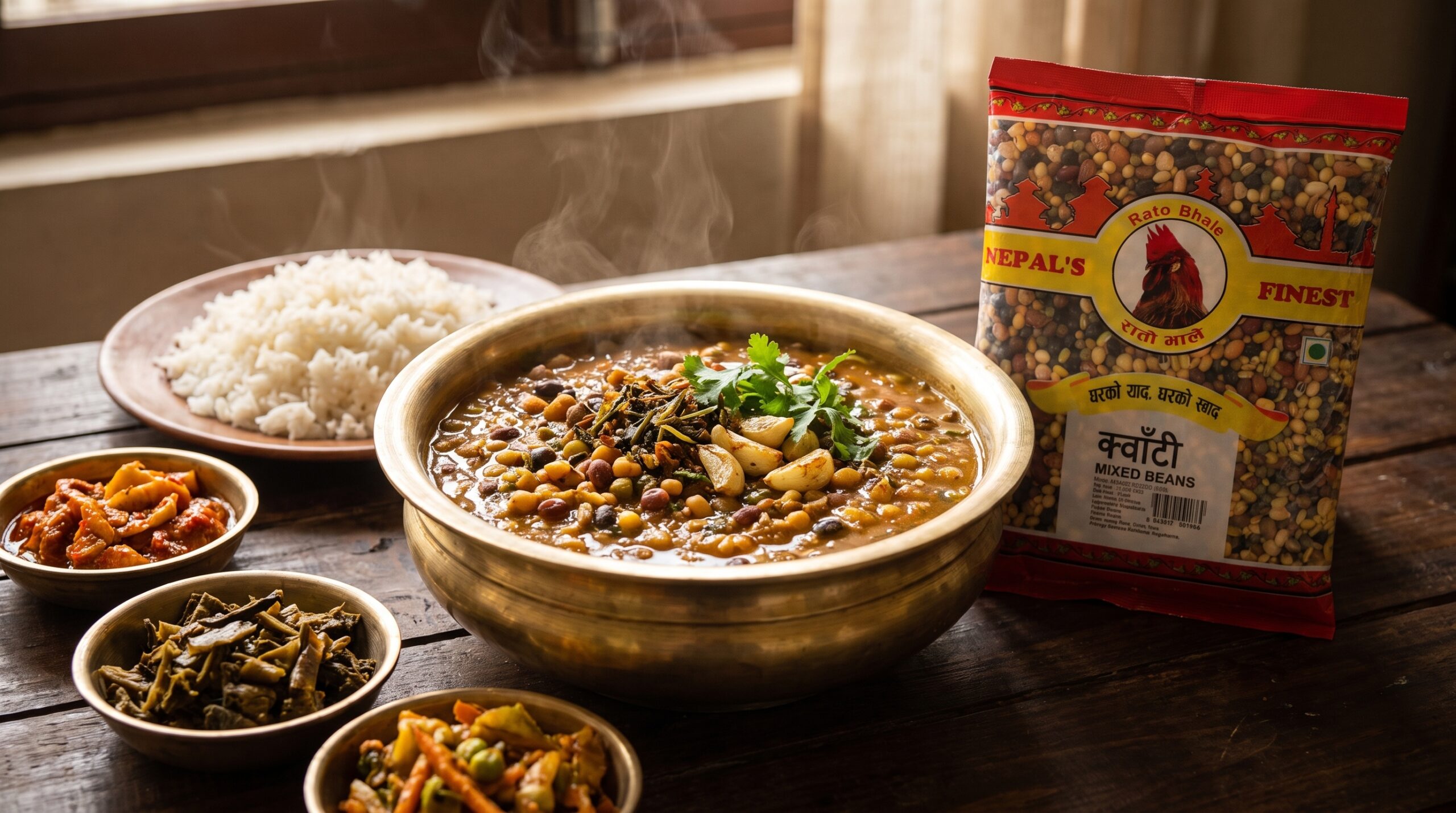
When winter arrives in Nepal, traditional kitchens turn toward warm, hearty and comforting foods. Among the dishes that perfectly capture this seasonal cooking tradition is Kwaanti—a flavorful preparation made from a mixture of beans, lentils and pulses.
Kwaanti is more than just a bowl of mixed pulses. It reflects the Nepali tradition of combining different locally available legumes and turning them into a nourishing, flavorful meal with simple seasonings.
Cooked until tender and finished with aromatic spices, garlic and Jimbu, Kwaanti makes a wonderful winter dish to enjoy with rice, roti or other traditional Nepali accompaniments.
What Is Kwaanti?
Kwaanti is a traditional Nepali dish prepared using a mixture of different beans, lentils and pulses.
The word is closely associated with Kwati, a traditional Newari mixed-bean soup prepared from several varieties of sprouted legumes. The exact combination can vary between households and preparations.
The beans and pulses are typically soaked—and traditionally may be sprouted—before cooking. They are then simmered together until tender and seasoned with spices, garlic, ginger and other familiar Nepali ingredients.
The result is a thick, flavorful and satisfying dish that is particularly welcome during colder months.
Why Is Kwaanti Special in Nepali Food Culture?
One of the most interesting things about Nepali cuisine is its ability to turn simple ingredients into dishes with strong cultural identity.
Kwaanti brings together different types of pulses in a single preparation. Instead of cooking one bean or lentil at a time, several varieties are combined to create a dish with different textures and flavors.
It is also closely connected with Newar food traditions, where Kwati has long been prepared as a traditional mixed-bean soup.
For many Nepali families, dishes like Kwaanti represent more than everyday cooking. They connect food with seasonal traditions, family gatherings and the culinary heritage passed from one generation to another.
The Traditional Kwaanti Method
A traditional Kwaanti preparation begins with the pulses themselves.
Different beans and lentils can be combined depending on availability. Common mixtures may include varieties of:
- Black gram
- Soybeans
- Chickpeas
- Kidney beans
- Mung beans
- Peas
- Lentils
- Other locally available pulses
The exact combination does not have to be identical every time. That flexibility is part of the charm of traditional mixed-pulse cooking.
Soaking the Pulses
The beans and pulses should be rinsed thoroughly and soaked in water.
Traditionally, Kwati involves sprouted legumes, so the soaked pulses may be allowed to sprout before cooking. If you are preparing a simpler everyday version, you can also cook the soaked mixture directly.
Sprouting takes additional preparation time, but it gives the dish its characteristic traditional approach.
How to Make Kwaanti at Home
Here is a practical Nepali-style preparation that can be adapted depending on the pulses you have available.
Ingredients
- 1 cup mixed beans and pulses
- 1 medium onion, chopped
- 2–3 cloves garlic, chopped
- Small piece of ginger, finely chopped
- 1–2 green chillies
- ½ teaspoon turmeric
- 1 teaspoon cumin
- 1–2 tablespoons mustard oil or ghee
- A small amount of Jimbu
- Salt, according to taste
- Red chilli powder, according to taste
- Water, as required
- Fresh coriander for serving
Optional Spices
You can also add:
- Cumin seeds
- Fenugreek seeds
- Black pepper
- Bay leaf
- Garam masala
The exact seasoning can be adjusted according to your preferred Nepali style.
Step-by-Step Preparation
1. Wash and Soak
Rinse the mixed beans and pulses thoroughly.
Soak them in plenty of water for several hours or overnight.
If you want to prepare a more traditional sprouted version, drain the soaked pulses and allow them to sprout before cooking.
2. Cook the Pulses
Place the soaked mixture into a pressure cooker or heavy cooking pot.
Add enough water and cook until the beans become soft and tender.
The cooking time will depend on the types of pulses used and whether they have been sprouted.
3. Prepare the Masala
Heat mustard oil or ghee in a separate pan.
Add cumin seeds and allow them to sizzle.
Add chopped onion, garlic, ginger and green chilli. Cook until aromatic.
Add turmeric, chilli powder and salt.
4. Add Jimbu
Now comes one of the most familiar Nepali touches.
Add a small amount of Jimbu to the hot oil and allow it to sizzle briefly.
Jimbu has a distinctive aroma and is traditionally used to season dal, beans and other Nepali dishes.
5. Combine Everything
Add the cooked beans and pulses to the seasoned mixture.
Stir well and allow everything to simmer together for several minutes.
If you prefer a soupier Kwaanti, add more hot water. For a thicker preparation, allow it to simmer longer.
Taste and adjust the salt and spices.
6. Garnish and Serve
Finish with freshly chopped coriander.
Serve hot.
What Does Kwaanti Taste Like?
The flavor of Kwaanti depends on the combination of beans and the spices used, but the dish generally has an earthy, hearty character.
The different pulses contribute different textures, while garlic, ginger, cumin, chilli and mustard oil create the familiar warmth associated with Nepali cooking.
Jimbu adds another distinctive layer of aroma.
Unlike a heavily spiced curry, Kwaanti allows the beans and pulses to remain central to the dish.
What to Eat with Kwaanti
Kwaanti is versatile enough to work with several traditional Nepali foods.
Kwaanti with Rice
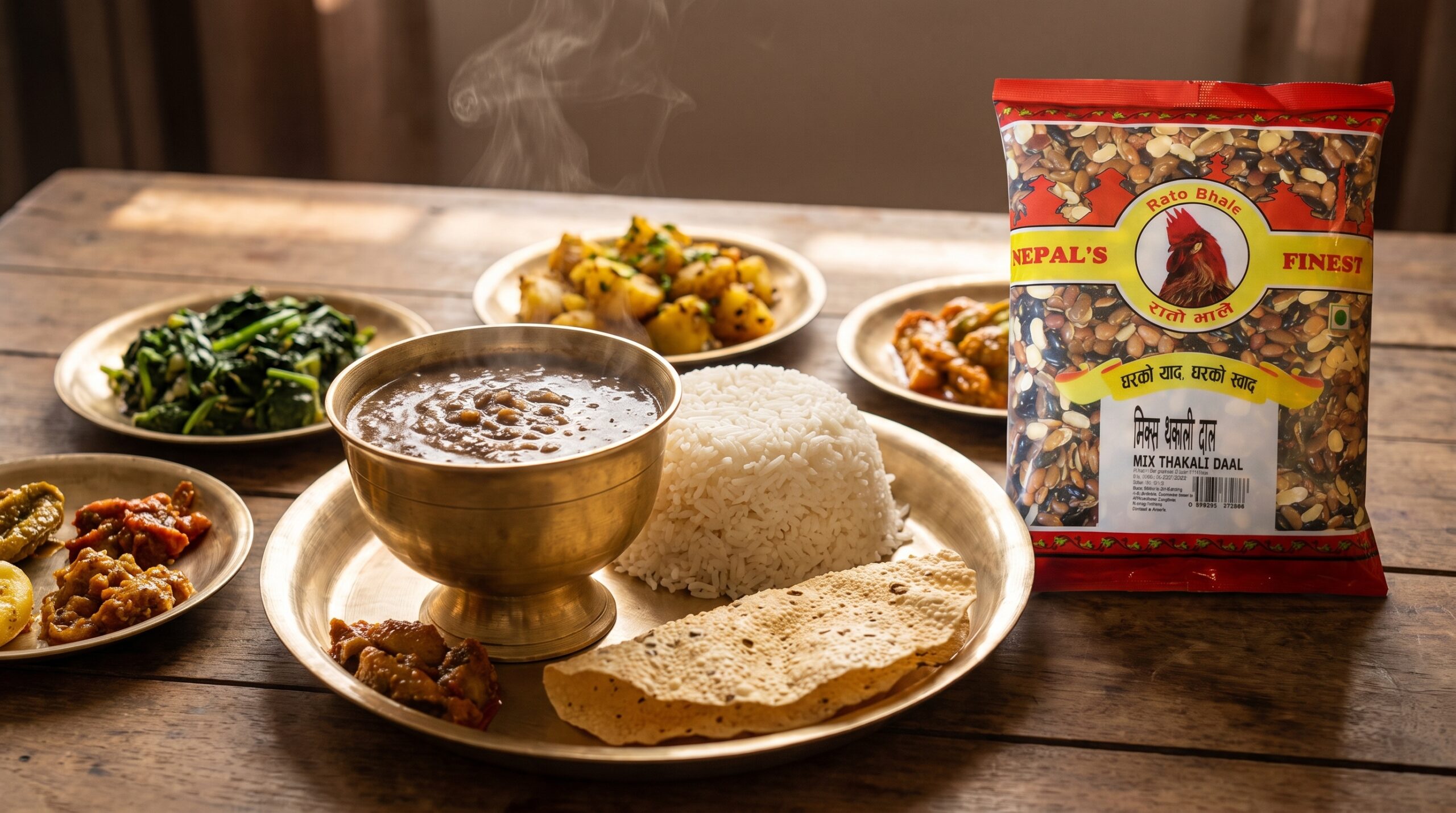
Serve a bowl of hot Kwaanti with steamed rice for a simple and comforting meal.
Add achar and seasonal vegetables to complete the plate.
Kwaanti with Roti
A thicker Kwaanti preparation pairs particularly well with roti.
The beans provide a hearty accompaniment while the spices add flavor without requiring an elaborate curry.
Kwaanti with Dhindo
For an especially traditional combination, serve Kwaanti alongside Dhindo.
Millet, buckwheat or corn-based Dhindo works beautifully with a warm bowl of mixed pulses.
Kwaanti with Achar
A spicy or tangy achar can provide a sharp contrast to the earthy flavor of the beans.
Try it with tomato achar, lapsi achar or another favorite Nepali pickle.
Kwaanti for Cold Winter Days
Kwaanti naturally fits into the winter kitchen.
A steaming bowl of mixed beans, seasoned with garlic, spices and Jimbu, is the kind of meal that feels particularly satisfying when the weather is cold.
The preparation can also be made in a larger batch, making it practical for family meals.
Serve it hot alongside rice, Dhindo, roti and seasonal vegetables for a complete traditional-style meal.
Kwaanti and Nepali Food Heritage
Nepal’s food culture is incredibly diverse, and Kwaanti is a good example of how regional culinary traditions have become part of the country’s broader food identity.
Its connection with Newar cuisine is particularly important. Kwati is traditionally associated with the Newar community and is prepared as a mixed-bean dish with cultural significance.
At the same time, mixed pulses are widely appreciated across Nepali households, and different families may have their own preferred combinations and preparation methods.
This variation is what makes traditional Nepali cooking so interesting.
There is rarely only one way to prepare a beloved dish.
Bringing Kwaanti to the Nepali Diaspora
For Nepalis living abroad, traditional dishes like Kwaanti can be a simple way to keep familiar food traditions alive.
Beans and pulses are practical pantry ingredients, and the basic preparation does not require complicated equipment or hard-to-find cooking techniques.
With mixed pulses, mustard oil, garlic, spices and Jimbu, families can recreate the comforting flavors of a Nepali winter kitchen even when living far from Nepal.
It can also be an excellent dish to introduce friends and family from other cultures to the variety of Nepali food.
Why Rato Bhale Kwaanti Belongs in Your Pantry
Rato Bhale Kwaanti brings the tradition of mixed Nepali pulses into the modern kitchen.
It can be prepared as a warm soup or thicker bean dish and seasoned with traditional ingredients such as Jimbu, garlic, chilli and mustard oil.
Enjoy it with:
- Steamed rice
- Dhindo
- Roti
- Gundruk
- Achar
- Seasonal vegetables
Whether you are cooking a traditional family meal in Nepal or looking for a taste of home abroad, Kwaanti offers plenty of possibilities.
Final Thoughts
Kwaanti is a celebration of Nepal’s traditional pulse-based cooking.
By bringing different beans and lentils together, seasoning them with familiar Nepali spices and finishing the dish with aromatic Jimbu, a simple mixture of pulses becomes a deeply comforting meal.
It is particularly well suited to cold-weather cooking and pairs beautifully with rice, roti and Dhindo.
For anyone looking to explore traditional Nepali food, Kwaanti is a dish worth bringing into the kitchen.
Discover Rato Bhale Kwaanti and enjoy the warmth, variety and tradition of Nepali mixed pulses at home.
Talk to Our Trade Expert
Get personalized guidance on sourcing, pricing, and export logistics from our experienced trade specialists.
Schedule a Free Consultation