When the colder months arrive, Nepali kitchens naturally turn toward warm, hearty meals made with traditional grains, beans and pulses.
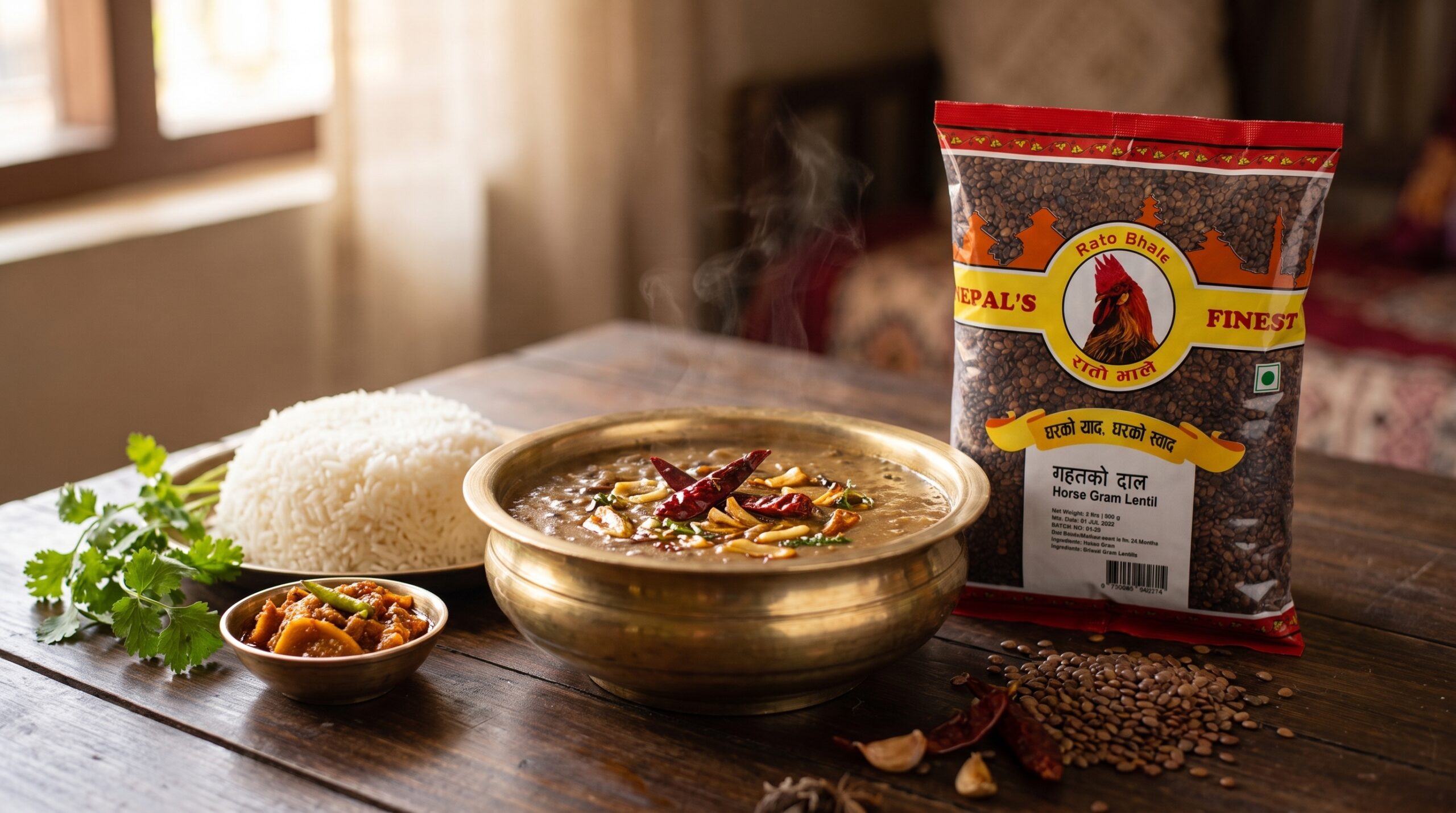
Among these winter favorites is Gahat Ko Daal, a traditional Nepali preparation made from Gahat, commonly known in English as horse gram.
With its earthy flavor and hearty texture, Gahat Ko Daal has been part of traditional Nepali cooking for generations. It can be prepared as a simple dal for everyday meals or combined with familiar ingredients such as garlic, ginger, chilli and Jimbu for a deeply aromatic bowl of comfort.
Served with steamed rice, Dhindo, roti or achar, Gahat Ko Daal is a wonderful example of how simple Nepali ingredients can create satisfying traditional food.
What Is Gahat Ko Daal?
Gahat Ko Daal is a traditional Nepali dal made from horse gram.
Gahat is a small, hard pulse with a distinctive earthy character. It is commonly used in traditional South Asian cooking and has a particularly familiar place in Nepali kitchens.
Because the beans are relatively firm, Gahat is often soaked before cooking and then simmered until tender.
Once cooked, it can be seasoned with traditional Nepali spices and finished with a tempering of mustard oil or ghee.
The result is a flavorful dal with a rustic character that works especially well alongside rice and other traditional foods.
Why Gahat Ko Daal Is Popular in Winter
Gahat has long been associated with traditional cold-weather cooking in Nepal.
During winter, meals often shift toward warm preparations that can be cooked slowly and served hot. Gahat fits naturally into this style of cooking.
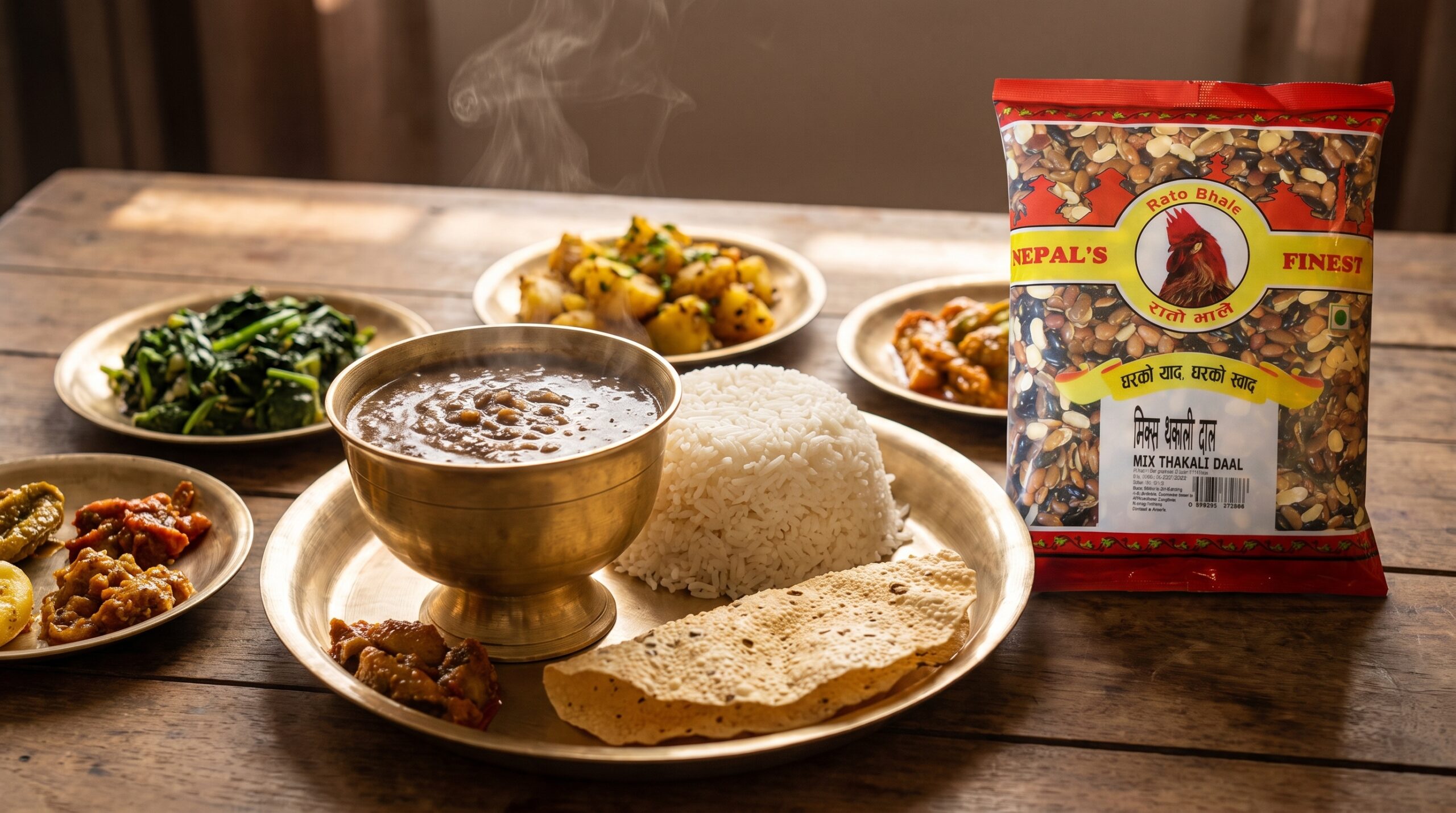
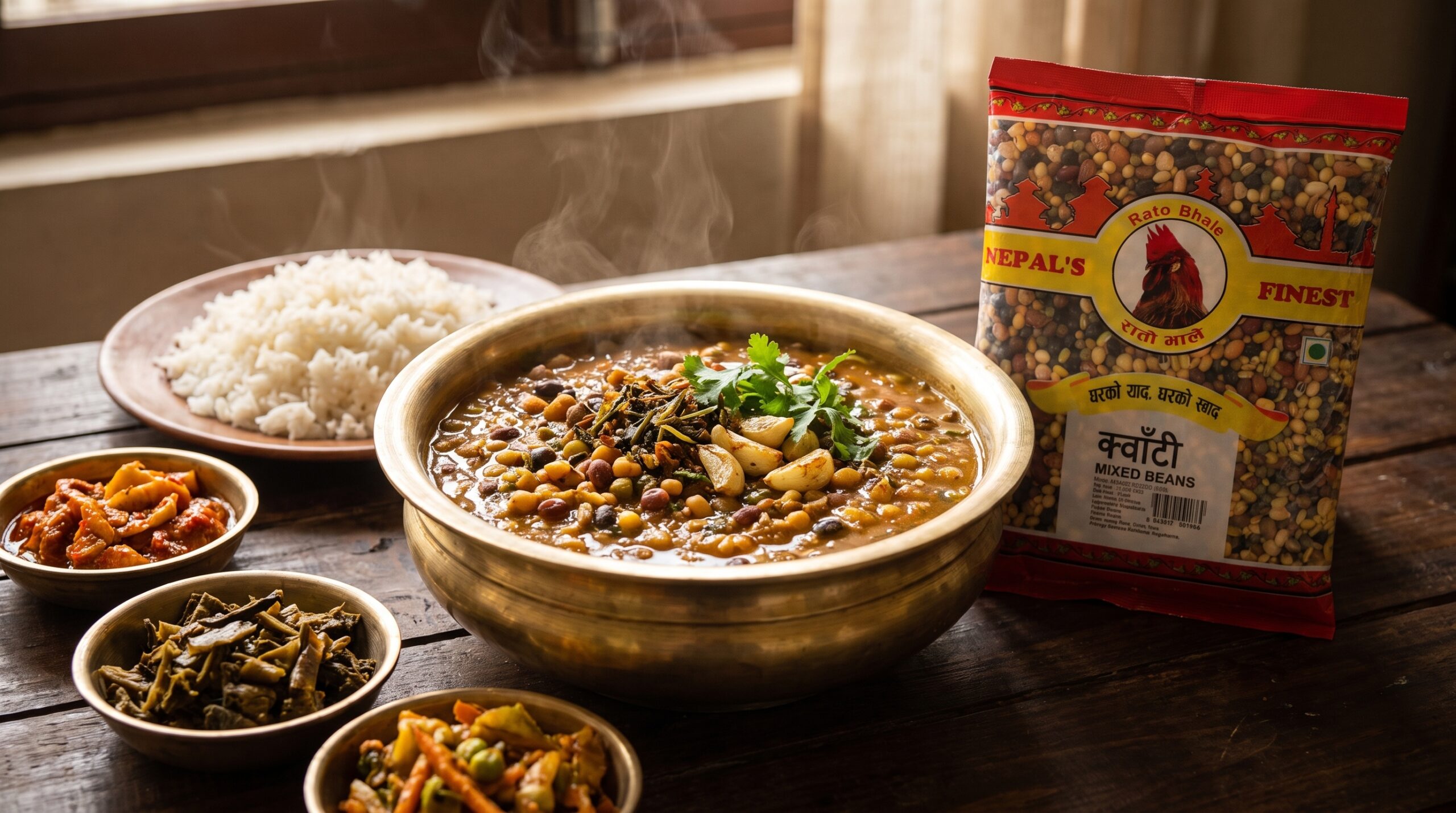
A steaming bowl of Gahat Ko Daal with rice, achar and seasonal vegetables makes a comforting meal for cold days.
Rather than relying on complicated ingredients, the dish gets its character from the pulse itself and the traditional seasonings used to prepare it.
Gahat in Traditional Nepali Cuisine
Nepali food culture makes extensive use of different grains, lentils, beans and pulses.
Gahat is one of the pulses that gives Nepali cuisine its distinctive regional character.
It can be prepared in several ways depending on the household and region. Some preparations are relatively soupy, while others are cooked down into a thicker consistency.
It can also be combined with ingredients such as:
- Garlic
- Ginger
- Green chilli
- Turmeric
- Cumin
- Jimbu
- Mustard oil
- Fresh coriander
The combination of these simple ingredients allows the earthy flavor of Gahat to remain at the center of the dish.
How to Cook Gahat Ko Daal
Because Gahat is a firm pulse, soaking is an important part of the preparation.
Ingredients
- 1 cup Gahat
- 3–4 cups water, or as required
- ½ teaspoon turmeric
- Salt, according to taste
- 2–3 cloves garlic, chopped
- Small piece of ginger, finely chopped
- 1–2 green chillies
- 1–2 tablespoons mustard oil or ghee
- A small amount of Jimbu
- ½ teaspoon cumin seeds
- Red chilli, according to taste
- Fresh coriander for garnish
Step 1: Wash the Gahat
Rinse the Gahat thoroughly under clean water.
Remove any unwanted particles and drain.
Step 2: Soak the Gahat
Place the Gahat in a bowl and cover it generously with water.
Allow it to soak for several hours or overnight.
Soaking helps soften the hard pulse and makes cooking easier.
Step 3: Cook Until Tender
Drain the soaked Gahat and transfer it to a pressure cooker or heavy cooking pot.
Add fresh water and turmeric.
Cook until the Gahat becomes tender.
Because cooking time can vary depending on the pulse and cooking method, check the beans and continue cooking until they reach the desired texture.
Once tender, lightly mash some of the Gahat with the back of a spoon.
This naturally thickens the dal while leaving some whole beans for texture.
Making the Jimbu Tempering
The tempering is where the familiar Nepali aroma really comes together.
Heat mustard oil or ghee in a small pan.
Add cumin seeds and let them sizzle.
Add chopped garlic, ginger and green chilli.
Cook until aromatic.
Then add a small amount of Jimbu and allow it to sizzle briefly in the hot oil.
The combination of mustard oil, garlic and Jimbu creates a distinctive aroma that works particularly well with the earthy flavor of Gahat.
Pour the tempering over the cooked dal.
Stir gently and allow it to simmer for a few more minutes.
Adjust the salt and chilli according to taste.
Finish with fresh coriander.
Gahat Ko Daal with Jimbu
Jimbu is a traditional Himalayan herb commonly used in Nepali cooking.
It is especially popular for tempering dal and beans.
The technique is simple:
Heat the oil → add Jimbu → let it sizzle → pour over the cooked dal.
For Gahat Ko Daal, this preparation adds an aromatic contrast to the naturally earthy flavor of the horse gram.
If you enjoy traditional Nepali dal, Jimbu is an ingredient worth keeping in your pantry.
How to Serve Gahat Ko Daal
Gahat Ko Daal is incredibly versatile.
With Steamed Rice
The classic combination is hot Gahat Ko Daal with steamed rice.
Add achar, seasonal vegetables and greens for a traditional Nepali meal.
With Dhindo
Gahat pairs beautifully with Dhindo.
Try it with Dhindo prepared from millet, buckwheat or corn flour for a hearty traditional combination.
With Roti
A thicker Gahat preparation can be served alongside roti.
The earthy pulse and warm spices make a satisfying accompaniment.
With Achar
Achar adds acidity and spice that contrasts nicely with the earthy character of Gahat.
Try it with tomato achar, sesame achar, lapsi-based achar or your favorite Nepali pickle.
A Simple Nepali Winter Plate
If you want to turn Gahat Ko Daal into a complete traditional meal, try building your plate with:
Steamed rice + Gahat Ko Daal + Saag + Achar + Seasonal vegetables
For a different combination:
Dhindo + Gahat Ko Daal + Achar + sautéed greens
These simple combinations showcase the variety of traditional Nepali home cooking without requiring complicated recipes.
Gahat Ko Daal and Nepali Food Heritage
Traditional Nepali cooking is built around ingredients that have been cultivated, traded and cooked across generations.
Gahat is an excellent example of this food heritage.
It is not a flashy ingredient. It does not need an elaborate recipe to become delicious.
Instead, traditional cooking techniques—soaking, slow cooking, tempering and pairing with familiar accompaniments—bring out its character.
This is part of what makes Nepali food so interesting.
A simple pulse can become an important part of a memorable meal.
Gahat Ko Daal for Nepalis Living Abroad
For Nepalis living in the USA, UK, Australia, Canada and other parts of the world, traditional pulses can help keep familiar food traditions present in everyday life.
Gahat Ko Daal is particularly practical because it can be prepared with ingredients that are commonly found in a Nepali pantry.
With Gahat, Jimbu, mustard oil and a few basic spices, you can recreate a warm bowl of traditional-style dal even when you are far from home.
It is also an excellent way for younger generations of the Nepali diaspora to become familiar with traditional ingredients and cooking methods.
Why Choose Rato Bhale Gahat Ko Daal?
Rato Bhale Gahat Ko Daal brings this traditional Nepali pulse into the modern kitchen.
It can be prepared as a simple everyday dal or incorporated into a larger traditional meal.
For a classic preparation, cook the Gahat until tender and finish it with:
- Jimbu
- Garlic
- Ginger
- Green chilli
- Turmeric
- Cumin
- Mustard oil or ghee
Then serve it with rice, Dhindo, roti, achar and seasonal vegetables.
Whether you are preparing a family meal in Nepal or recreating traditional flavors abroad, Rato Bhale Gahat Ko Daal makes it easy to bring a familiar Nepali ingredient to the table.
Final Thoughts
Gahat Ko Daal is a traditional Nepali winter favorite that celebrates the simplicity of pulse-based cooking.
Its earthy character, hearty texture and versatility make it suitable for everything from a simple bowl of dal and rice to a full traditional Nepali meal.
Season it with aromatic Jimbu, garlic and mustard oil, serve it with steaming rice or Dhindo, and add your favorite achar and seasonal vegetables.
Sometimes, the most memorable meals are made from the simplest ingredients.
Discover Rato Bhale Gahat Ko Daal and bring the warmth and tradition of Nepali winter cooking to your kitchen.
Talk to Our Trade Expert
Get personalized guidance on sourcing, pricing, and export logistics from our experienced trade specialists.
Schedule a Free Consultation