

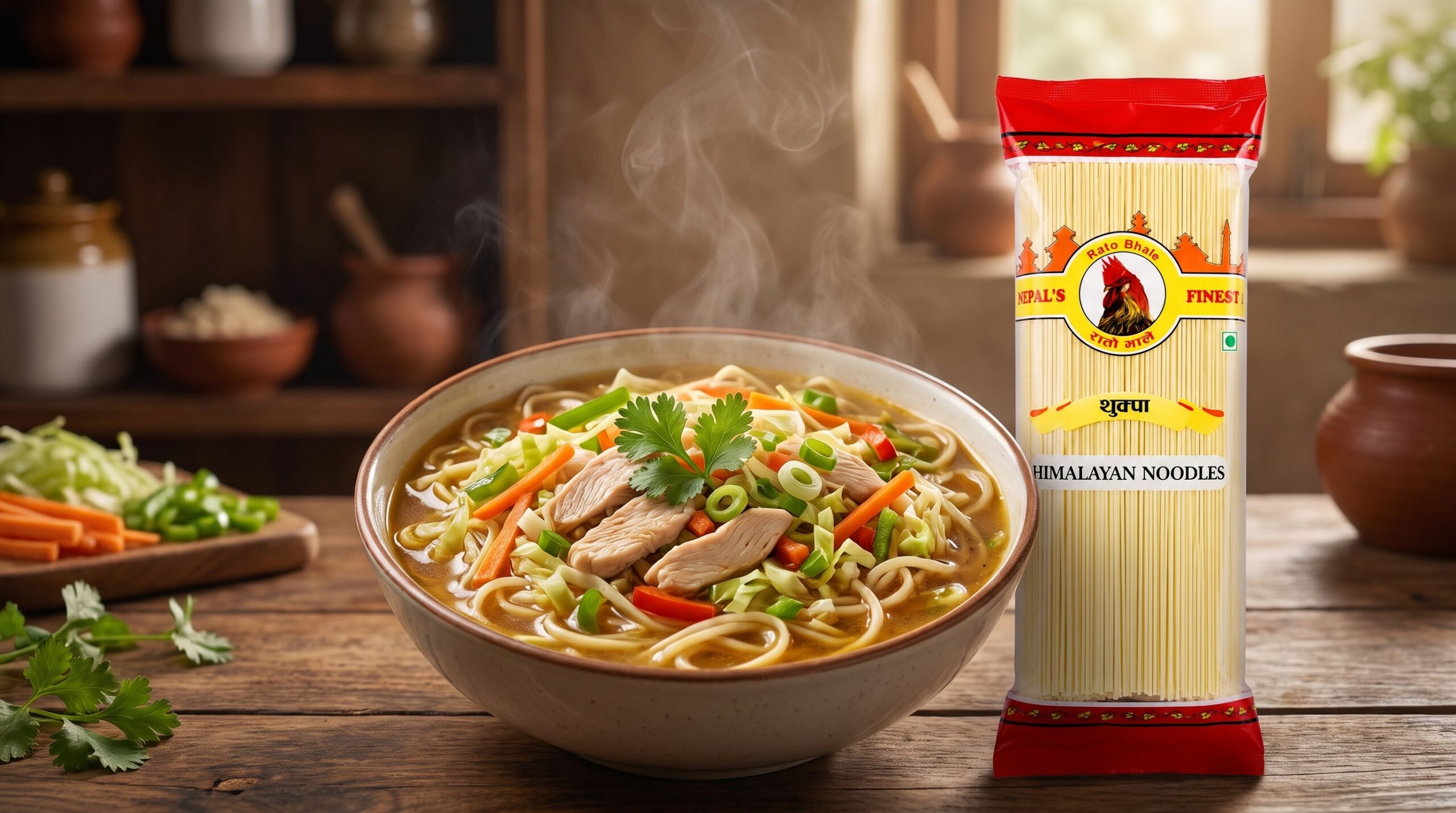
When the weather gets cold, few things are as comforting as a steaming bowl of Thukpa.
Warm noodles, flavorful broth, fresh vegetables, aromatic spices and your choice of meat or other ingredients come together in one satisfying bowl. Popular across the Himalayan region and especially loved in Nepal, Thukpa has become a familiar part of Nepali food culture—from local eateries and family kitchens to restaurants serving Nepali cuisine around the world.
The best part? Thukpa is easy to customize and simple to cook at home.
With Rato Bhale Thukpa and Rato Bhale Thukpa Masala, you can prepare a flavorful bowl of Himalayan-style noodle soup using ingredients that are easy to find.
What Is Thukpa?
Thukpa is a noodle soup traditionally associated with the Himalayan region.
It typically combines noodles with a savory broth, vegetables and different sources of protein. Depending on the cook, Thukpa can be made with chicken, meat, eggs or vegetables.
There isn’t just one way to make Thukpa.
Different regions, households and restaurants have their own versions, with variations in the noodles, broth, vegetables, spices and protein.
In Nepal, Thukpa has become particularly popular as a warm, flavorful meal that works especially well during colder weather.
What Makes a Good Bowl of Thukpa?
A great bowl of Thukpa comes down to a few simple elements:
Good noodles + flavorful broth + fresh vegetables + aromatic seasoning + your choice of protein.
The broth is especially important.
It needs enough flavor to bring all the ingredients together without overpowering the noodles and vegetables.
This is where a good Thukpa Masala can make preparation easier by bringing aromatic seasoning into the broth.
Rato Bhale Thukpa
Rato Bhale Thukpa provides a convenient base for preparing a comforting bowl of Thukpa at home.
Instead of preparing noodles from scratch, you can build your bowl around the Rato Bhale Thukpa noodles and customize the rest according to your taste.
Add vegetables, chicken, meat or egg, then finish the broth with Rato Bhale Thukpa Masala for a flavorful Himalayan-inspired meal.
How to Cook Thukpa at Home
The following recipe is a simple way to prepare a hearty bowl of chicken or vegetable Thukpa.
You can easily change the ingredients depending on what you have available.
Ingredients:
For the Thukpa
- Rato Bhale Thukpa noodles
- 100–150 g chicken, thinly sliced
or use vegetables/egg for a different version - 1 small onion, sliced
- 2–3 cloves garlic, finely chopped
- Small piece of ginger, finely chopped
- 1–2 green chillies, sliced
- 1 small carrot, julienned
- ½ cup cabbage, thinly sliced
- ½ cup capsicum, sliced
- Spring onions, chopped
- Fresh coriander
- 1–2 tablespoons cooking oil
- Salt, according to taste
- Water or stock
For Seasoning
- Rato Bhale Thukpa Masala
- Black pepper, according to taste
- Chilli powder or fresh chilli, according to taste
- A little soy sauce, if desired
You can add or remove vegetables depending on your preference.
Step 1: Prepare the Ingredients
Before you start cooking, prepare all your ingredients.
Slice the chicken into thin pieces so it cooks quickly.
Cut the vegetables into thin strips. This allows them to cook quickly while retaining some texture.
Keep the garlic, ginger and green chilli ready for the base of the broth.
Preparing everything beforehand makes cooking Thukpa much easier.
Step 2: Cook the Noodles
Bring a pot of water to a boil.
Add the Rato Bhale Thukpa noodles and cook according to the package instructions.
Once the noodles are cooked, drain them and set them aside.
Avoid overcooking the noodles because they will be added back to the hot broth later.
Step 3: Start the Thukpa Base
Heat oil in a large pot.
Add the chopped garlic, ginger and green chilli.
Sauté until aromatic.
Add the sliced onion and cook until it begins to soften.
If you are making chicken Thukpa, add the sliced chicken at this stage.
Cook until the chicken is no longer raw on the outside.
For a vegetarian Thukpa, simply move on to the vegetables.
Step 4: Add the Vegetables
Add the carrot, cabbage and capsicum.
Stir-fry them for a few minutes.
You don’t need to completely soften the vegetables. Keeping some texture gives the finished Thukpa a better bite.
You can also add other vegetables such as:
- Mushrooms
- Spinach
- Bok choy
- Green beans
- Corn
- Broccoli
Thukpa is a flexible dish, so use the vegetables you enjoy.
Step 5: Add the Thukpa Masala
Now add Rato Bhale Thukpa Masala.
Mix it thoroughly with the vegetables and chicken.
Let the masala cook briefly with the ingredients so its aroma develops before adding the liquid.
This is the point where the familiar Thukpa character begins to come together.
Step 6: Add Water or Stock
Pour in water or chicken/vegetable stock.
Bring the broth to a gentle boil.
Allow it to simmer for several minutes so the flavors combine.
Taste the broth and adjust the salt and spice according to your preference.
If you like a stronger, spicier bowl, you can add fresh chilli or a little chilli powder.
Step 7: Add the Noodles
Once the broth is flavorful, add the cooked Rato Bhale Thukpa noodles.
Stir gently.
Allow everything to simmer together for another minute or two.
Don’t cook the noodles for too long at this stage.
You want them to remain soft but not mushy.
Step 8: Finish the Bowl
Turn off the heat.
Add chopped spring onions and fresh coriander.
You can also add a squeeze of fresh lemon for a little brightness.
Serve immediately while the Thukpa is steaming hot.
Chicken Thukpa vs. Vegetable Thukpa
One of the best things about Thukpa is how easily it can be adapted.
Chicken Thukpa
Thinly sliced chicken works particularly well because it cooks quickly in the broth.
You can use chicken breast or boneless thigh meat depending on your preference.
Vegetable Thukpa
For a vegetarian version, simply leave out the meat and add more vegetables.
Mushrooms, cabbage, carrots, spinach, capsicum and spring onions make a flavorful combination.
Egg Thukpa
You can also add an egg.
Either boil an egg separately and place it on top or crack an egg directly into the simmering broth and cook until set.
Mixed Thukpa
For a more substantial bowl, combine chicken or another protein with several vegetables and finish with fresh herbs.
How Spicy Should Thukpa Be?
That depends entirely on you.
Thukpa can be mild and aromatic or hot and spicy.
For a milder bowl:
- Use less fresh chilli
- Keep the seasoning moderate
- Add fresh lemon at the end
For a spicy Nepali-style bowl:
- Add fresh green chilli
- Add chilli powder
- Increase the amount of spicy seasoning according to taste
- Serve with extra chilli on the side
The goal is to build a broth that is flavorful rather than simply hot.
What to Serve with Thukpa
Thukpa is usually substantial enough to serve as a meal on its own.
But you can add small accompaniments if you want more variety.
Try serving it with:
- Fresh chilli
- Lemon wedges
- A small serving of achar
- Fried or boiled egg
- Fresh coriander
- Spring onions
For a Nepali-inspired meal, a spicy achar on the side can add a completely different layer of flavor.
Why Thukpa Is Perfect for Winter
There is something particularly satisfying about eating Thukpa during cold weather.
The steaming broth, warm noodles and aromatic spices make it an ideal comfort food when temperatures drop.
It is also practical.
You can prepare one pot of broth, add your preferred vegetables and protein, and serve everyone a customized bowl.
That makes Thukpa just as suitable for a quick family dinner as it is for a relaxed weekend meal.
Thukpa for Family Gatherings and Cold Evenings
Thukpa doesn’t have to be limited to everyday meals.
It can also work beautifully for casual gatherings.
Prepare a large pot of broth and offer different toppings such as:
- Chicken
- Boiled eggs
- Mushrooms
- Cabbage
- Carrots
- Spring onions
- Fresh chilli
- Lemon
- Achar
Everyone can build their bowl according to their own taste.
It is a simple way to turn a traditional noodle soup into a relaxed shared meal.
Bringing the Taste of Nepal Abroad
For Nepalis living outside Nepal, food is often one of the easiest ways to stay connected with home.
Thukpa is particularly easy to recreate because its basic ingredients—noodles, vegetables, protein, spices and broth—are accessible in many countries.
With Rato Bhale Thukpa and Rato Bhale Thukpa Masala, Nepali families abroad can prepare a warm bowl of familiar Himalayan-style comfort food in their own kitchens.
Whether you’re in Kathmandu, London, Sydney, Toronto or New York, a steaming bowl of Thukpa can make a cold evening feel a little more like home.
Try Your Own Thukpa Combination
There is no need to follow exactly the same recipe every time.
Once you have the basic method, experiment with different combinations.
Classic Chicken Thukpa
Chicken + cabbage + carrot + capsicum + noodles.
Vegetable Thukpa
Mushrooms + spinach + cabbage + carrot + noodles.
Spicy Thukpa
Extra green chilli + chilli seasoning + fresh coriander.
Egg Thukpa
Noodles + vegetables + broth + boiled or poached egg.
Meat Thukpa
Thinly sliced meat + vegetables + noodles + flavorful broth.
The possibilities are almost endless.
Why Choose Rato Bhale Thukpa?
Rato Bhale Thukpa makes it easy to prepare a warm noodle soup at home while giving you the flexibility to make the bowl your own.
Pair it with Rato Bhale Thukpa Masala, your choice of vegetables and protein, and a few fresh garnishes for a comforting meal inspired by Himalayan and Nepali food traditions.
Keep it simple or make it elaborate—the choice is yours.
Final Thoughts
Thukpa is more than just noodle soup.
It is a warm, adaptable dish that brings together noodles, vegetables, protein and aromatic seasoning in one comforting bowl.
Whether you prefer chicken, vegetables, egg or meat, the basic method remains simple: prepare the noodles, build a flavorful broth, add your ingredients, season with Rato Bhale Thukpa Masala, and serve it steaming hot.
Perfect for cold evenings, family meals and casual gatherings, Thukpa is a delicious way to enjoy the warmth and character of Himalayan-inspired cooking.
Pick up your Rato Bhale Thukpa, add your favorite ingredients, and make a steaming bowl of Thukpa your way.
Talk to Our Trade Expert
Get personalized guidance on sourcing, pricing, and export logistics from our experienced trade specialists.
Schedule a Free Consultation