

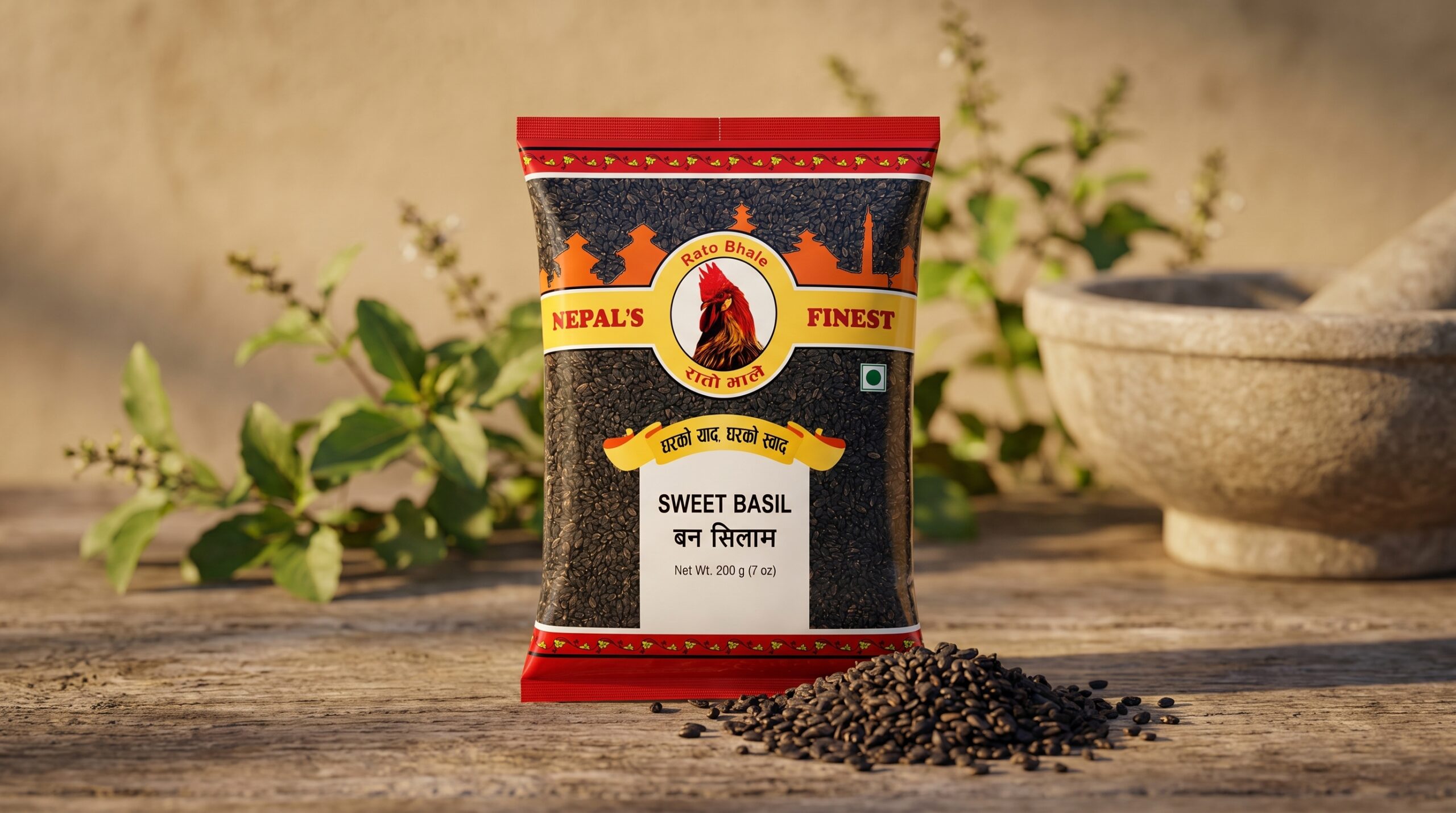
Ban Silam: Discover Nepal’s Traditional Perilla Seeds and How to Use Them
If you have grown up with Nepali food, you may already know the distinctive nutty aroma of Ban Silam. Known locally as Silam (सिलाम) and botanically associated with Perilla frutescens, these small seeds are a traditional ingredient found in Himalayan and Nepali cuisine.
Despite their tiny size, Ban Silam seeds have a remarkably rich flavor. They are commonly toasted and ground to make traditional chutneys, pickles, and seasonings, adding a warm, nutty character to everyday meals.
For Nepali families living abroad, ingredients such as Ban Silam are more than pantry staples—they are a way of keeping familiar flavors and food traditions alive.
What Is Ban Silam?
Ban Silam refers to the seeds of perilla, a plant that belongs to the mint family, Lamiaceae. In Nepal, Silam is a traditional food ingredient and is particularly associated with Himalayan and hill-region cuisines.
The seeds are small and can range in color, but they are recognized for their distinctive aroma and rich, slightly nutty taste.
Perilla is also recognized as an underutilized food crop found in Nepal, where its seeds are traditionally used as food.
The name may appear in different forms, including Silam, Ban Silam, or Bhangiro, depending on the region and language.
What Does Ban Silam Taste Like?
One of the reasons Silam has remained popular in Nepali kitchens is its distinctive flavor.
When lightly toasted, the seeds develop a deeper, more pronounced aroma. Once ground, they can provide a rich, nutty and earthy taste that works particularly well with chili, garlic, salt and other traditional ingredients.
This makes Ban Silam especially useful in preparations where a small amount of an ingredient needs to add plenty of character.
Ban Silam and Nepali Food
Ban Silam has traditionally been used in a variety of Nepali preparations.
1. Silam Chutney
One of the best-known uses is a traditional Silam chutney. Toasted seeds can be ground together with ingredients such as dried chili, garlic and salt to create a flavorful accompaniment to meals.
It pairs particularly well with staples such as rice, dal, dhido and beaten rice.
2. Pickles and Achar
Ground or toasted Silam can also be incorporated into traditional achar recipes. Its nutty flavor can add depth to spicy and tangy preparations.
3. Seasoning
Silam can be toasted and ground before being added to different dishes as a seasoning. Because of its strong aroma, even a relatively small quantity can contribute noticeable flavor.
Why Are Perilla Seeds Nutritionally Interesting?
Ban Silam is not simply a flavorful traditional ingredient. Perilla seeds have also attracted scientific interest because of their nutritional composition.
Research reviews report that perilla seeds contain polyunsaturated fatty acids, dietary fiber, amino acids, vitamins, minerals and other phytochemicals.
One of their most notable nutritional characteristics is their fatty-acid profile.
A Plant Source of Omega-3 ALA
Perilla seed oil is particularly rich in alpha-linolenic acid (ALA), a plant-based omega-3 fatty acid. Research has reported that ALA can account for a substantial proportion of the fatty acids in perilla seed oil.
This makes perilla an interesting traditional seed for people looking to include a variety of plant foods and sources of essential fatty acids in their diet.
However, it is important to distinguish nutritional value from medical claims. Ban Silam should be enjoyed as a food ingredient rather than promoted as a treatment or cure for a particular disease.
Ban Silam as Part of Traditional Himalayan Food Culture
Food traditions often tell us something about the communities that developed them.
Across Nepal’s diverse culinary landscape, locally available seeds, herbs, grains and spices have traditionally been incorporated into everyday cooking. Silam is one example of an ingredient that combines flavor, local food culture and nutritional value.
Its use also demonstrates how traditional Nepali cooking often relies on simple ingredients to create complex flavors.
How to Use Ban Silam at Home
If you are trying Ban Silam for the first time, one of the easiest methods is to toast the seeds lightly before using them.
Simple method:
- Place the Ban Silam seeds in a dry pan.
- Toast them lightly over low to medium heat.
- Remove them once they become aromatic.
- Allow them to cool.
- Grind them according to your preferred texture.
- Mix them with ingredients such as chili, garlic and salt for a simple traditional-style chutney.
Avoid overheating the seeds, as excessive heat can affect their flavor and nutritional oils.
Ban Silam for Nepali Families Abroad
For Nepali communities living in countries such as the United States, Canada, Australia and the United Kingdom, finding traditional ingredients can be an important part of maintaining familiar cooking traditions.
A packet of Ban Silam may look like a small addition to the pantry, but it can help recreate the flavors of home—from a traditional achar to a simple chutney served alongside dal bhat.
That is what makes traditional ingredients special: they connect food with memories, family and culture.
How to Store Ban Silam
Because seeds contain naturally occurring oils, proper storage is important.
Keep Ban Silam:
- In a clean, dry, airtight container
- Away from direct sunlight
- Away from moisture
- Away from strong-smelling ingredients
- In a cool storage area
For longer storage, follow the storage instructions provided on the product packaging.
Why Choose Rato Bhale Ban Silam?
At Rato Bhale, we focus on bringing traditional Nepali ingredients to consumers who appreciate authentic Himalayan flavors.
Our Ban Silam is intended for people who want to bring this distinctive traditional ingredient into their own kitchen—whether they are preparing a classic Nepali meal or experimenting with new recipes.
From spices and grains to traditional snacks and ingredients, Rato Bhale represents the flavors and food traditions of Nepal.
Bring a Taste of Nepal to Your Kitchen
Ban Silam may be small, but its role in Nepali cuisine is anything but insignificant.
With its distinctive nutty flavor, traditional culinary uses and interesting nutritional profile, this traditional perilla seed deserves a place in the pantry of anyone who enjoys authentic Nepali food.
Whether you use it to prepare chutney, add it to achar or simply explore traditional Himalayan flavors, Ban Silam is an easy way to experience a small part of Nepal’s rich culinary heritage.
Discover traditional Nepali flavors with Rato Bhale and bring the taste of Nepal to your kitchen.
Talk to Our Trade Expert
Get personalized guidance on sourcing, pricing, and export logistics from our experienced trade specialists.
Schedule a Free Consultation