

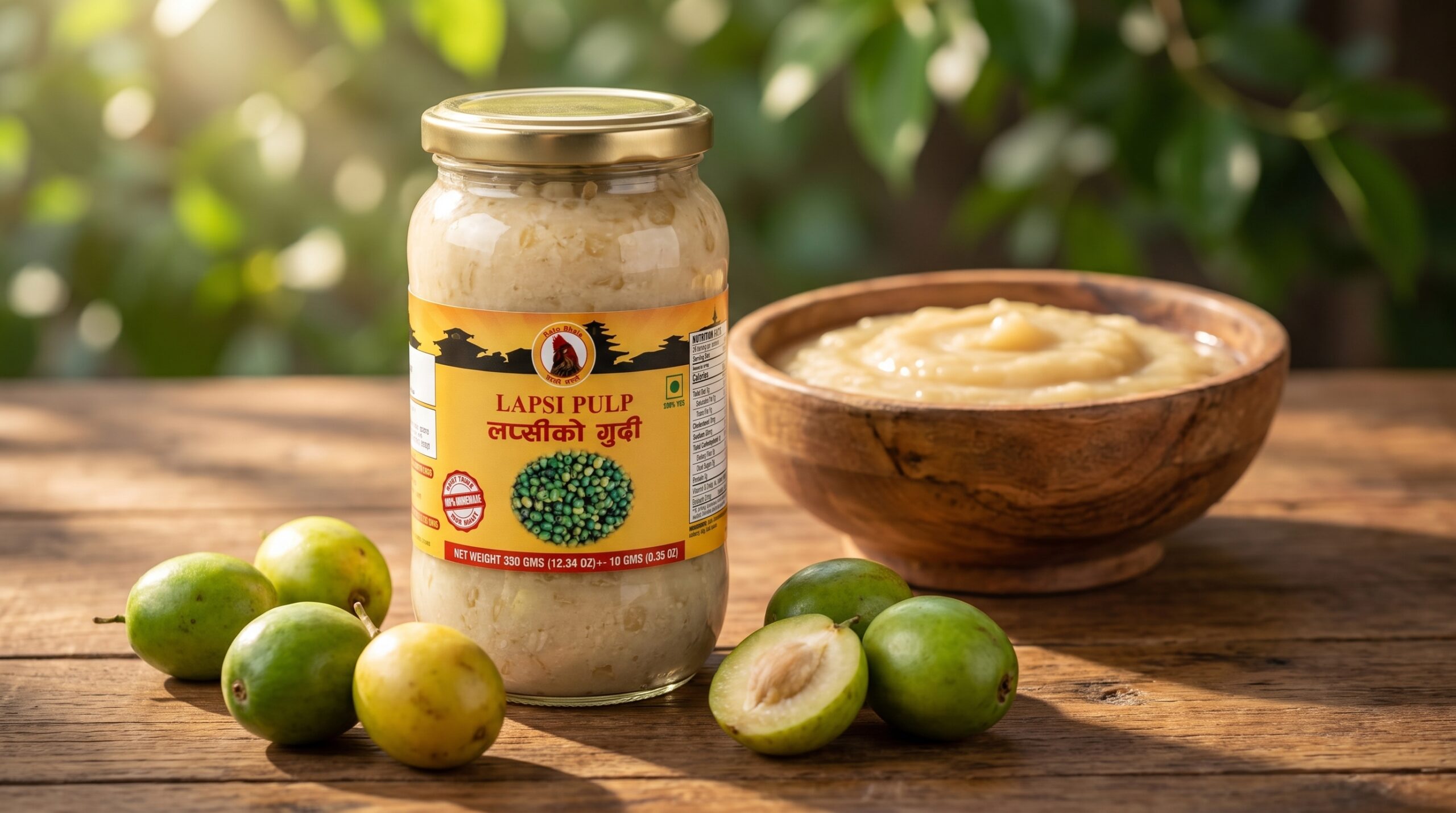
Lapsi Pulp: Nepal’s Tangy Hog Plum Fruit
There are certain flavors that immediately remind Nepalis of home. For many, one of those flavors is the unmistakable sourness of Lapsi.
Known in English as Nepali hog plum and scientifically as Choerospondias axillaris, Lapsi is a distinctive fruit native to the Himalayan region and deeply connected with Nepal’s food culture. Its naturally tart flavor makes it an important ingredient in traditional pickles, chutneys, fruit snacks and preserved foods.
At the heart of many of these preparations is Lapsi pulp—the soft, flavorful fruit portion that can be used as a base for a variety of traditional Nepali foods.
What Is Lapsi?
Lapsi is a small, greenish-yellow fruit with a characteristic sour taste. In Nepal, it is much more than simply a fruit eaten fresh.
For generations, Nepali cooks have found creative ways to transform Lapsi into different foods. The fruit can be processed into pickles, chutneys, candies, fruit leather and other traditional preparations.
Its strong sourness is precisely what makes Lapsi so useful in Nepali cuisine.
Unlike fruits that are valued primarily for their sweetness, Lapsi is appreciated for its ability to bring tanginess, acidity and depth of flavor to a dish.
What Is Lapsi Pulp?
Lapsi pulp is the soft fruit material obtained from processed Lapsi. Instead of using the whole fruit every time a traditional recipe calls for Lapsi, the pulp provides a convenient base that can be incorporated into different preparations.
The pulp has the characteristic tart flavor associated with Lapsi and can be combined with ingredients such as chili, salt, sugar and spices depending on the recipe.
This versatility is one reason Lapsi has remained such an important ingredient in traditional Nepali food.
Why Is Lapsi So Popular in Nepal?
Ask a Nepali about Lapsi and you will probably get more than a description of a fruit.
You may hear about titaura, homemade achar, childhood snacks, local markets or the familiar combination of sour, spicy and sweet flavors.
Lapsi is particularly popular because its natural tartness works exceptionally well with the flavor profile of Nepali cuisine.
A single fruit can become:
- Tangy achar
- Spicy-sweet titaura
- Fruit leather or pau
- Lapsi candy
- Chutneys
- Traditional preserved foods
- Flavorful sauces and accompaniments
The fruit’s culinary versatility has made it a recognizable part of Nepal’s food heritage.
Lapsi Pulp and Traditional Nepali Achar
One of the most beloved uses of Lapsi is in achar.
Traditional Lapsi achar brings together several contrasting flavors: sour fruit, salt, sweetness, chili and aromatic spices.
The result is an accompaniment that can completely change a simple meal.
Lapsi achar can be enjoyed alongside everyday Nepali foods such as:
- Dal bhat
- Chiura
- Roti
- Dhido
- Rice dishes
- Snacks and appetizers
Recipes vary from household to household, which is part of what makes Nepali achar culture so interesting.
Some families prefer a sweeter preparation, while others emphasize chili and spice.
Lapsi Pulp and Titaura
If there is one food that immediately demonstrates the versatility of Lapsi, it is titaura.
Titaura is a traditional Nepali fruit-based snack made using processed fruit pulp and different combinations of spices, salt and sugar. Lapsi is one of the most recognizable bases for this type of snack.
The result can be:
Sour + spicy + salty + sweet
That combination is what makes Lapsi-based titaura so memorable.
For many Nepalis living outside the country, titaura is not simply a snack. It is a taste associated with childhood, school days, family trips and visits to Nepal.
The Nutritional Side of Lapsi
Lapsi is also interesting from a nutritional perspective.
Research on Choerospondias axillaris has identified nutrients and bioactive compounds in the fruit, including vitamin C, carbohydrates, minerals and various phytochemicals.
Lapsi fruit is particularly noted for its vitamin C content. It also contains naturally occurring compounds such as polyphenols and flavonoids that have attracted scientific interest.
However, the nutritional composition can vary depending on the fruit, processing method and product formulation. Lapsi should be appreciated first and foremost as a traditional food ingredient rather than treated as a medicine.
What Makes Lapsi Pulp Different?
The appeal of Lapsi pulp comes down to one simple characteristic:
Flavor.
Lapsi has a sourness that is difficult to replicate with ordinary sweet fruits.
That natural tartness gives Lapsi-based foods their distinctive character. When combined with spices, sugar or salt, the acidity creates a balanced flavor profile that can be simultaneously sharp, sweet, spicy and savory.
This is why Lapsi works so well in foods that are meant to awaken the palate.
How Can You Use Lapsi Pulp?
Lapsi pulp can be used as a starting ingredient for a range of preparations.
1. Make Lapsi Achar
Combine Lapsi pulp with your preferred spices, chili, salt and sweetener to create a traditional-style achar.
2. Prepare Titaura
Use Lapsi pulp as the fruit base for homemade titaura. Adjust the amount of chili, salt and sugar according to your preferred balance.
3. Create a Tangy Chutney
Lapsi pulp can be combined with chili, garlic and other seasonings to create a sharp and flavorful chutney.
4. Add It to Traditional Recipes
Because of its natural acidity, Lapsi can be used wherever a recipe needs a distinctive sour fruit flavor.
The possibilities depend on the recipe and the desired balance of sweet, sour and spicy flavors.
Lapsi: A Taste of Nepal for Nepalis Abroad
For Nepali communities living in the United States, Australia, Canada, the United Kingdom and other countries, traditional ingredients can carry a meaning far beyond their culinary purpose.
Lapsi is one of those ingredients.
The flavor of Lapsi achar or titaura can bring back memories of Nepal even when you are thousands of kilometers away.
That is the special role traditional foods play in a diaspora community. They preserve familiar flavors and help connect younger generations with the food traditions of their parents and grandparents.
From a Himalayan Fruit to a Global Pantry
Nepal has an enormous variety of traditional fruits, grains, herbs, spices and food products that are still relatively unfamiliar outside South Asia.
Lapsi is a perfect example.
What begins as a naturally sour Himalayan fruit can become an ingredient used in pickles, snacks, chutneys and preserved foods.
Lapsi pulp makes this traditional flavor easier to incorporate into different recipes while retaining the distinctive character that makes Lapsi so recognizable.
Discover the Flavor of Lapsi
Lapsi is not simply another sour fruit.
It is part of Nepal’s culinary identity.
From homemade achar to spicy titaura, Lapsi has been transformed by Nepali kitchens into some of the country’s most distinctive flavors. Its combination of natural tartness, culinary versatility and nutritional interest makes it a fascinating traditional ingredient.
Rato Bhale Lapsi Pulp brings the distinctive flavor of this traditional Nepali fruit to your kitchen, making it easier to explore the many ways Lapsi can be used in authentic Nepali cooking.
Whether you are preparing achar, making a traditional snack or simply looking to recreate the flavors of Nepal, Lapsi pulp is a simple way to bring a little taste of home to the table.
Talk to Our Trade Expert
Get personalized guidance on sourcing, pricing, and export logistics from our experienced trade specialists.
Schedule a Free Consultation