Flours
Kodo ko Pitho
Kodo Ko Pitho
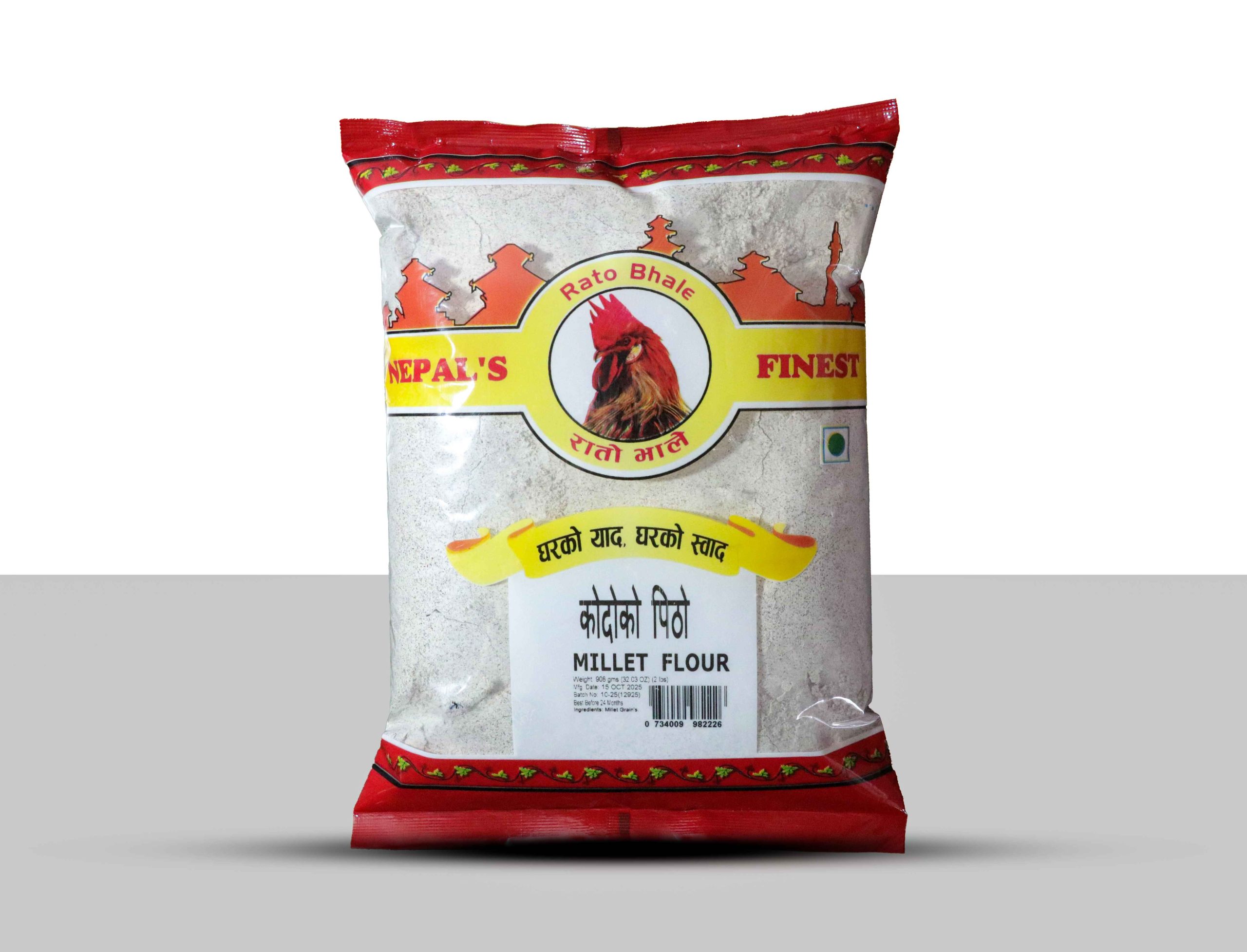
Kodo Ko Pitho in English is commonly known as millet flour. Made by grinding kodo, a traditional grain widely consumed in Nepal, this flour has been an important part of traditional Nepali cuisine for generations, especially in the country’s hilly regions.
Finely milled and versatile, this traditional Nepali flour is commonly used to prepare authentic dishes such as dhindo, roti, porridge, and other regional foods. Its distinctive earthy flavour and deep connection to Nepal’s culinary culture make it a familiar ingredient in many households.
What Is Kodo Ko Pitho in English?
Kodo Ko Pitho in English is commonly translated as millet flour. In Nepali, “Kodo” refers to the grain, while “Pitho” means flour. The grain is cleaned and ground into a fine flour suitable for preparing a variety of traditional dishes.
Kodo has long been cultivated and consumed in Nepal, particularly in hilly and rural regions where millet-based foods form an important part of local food traditions.
What Is Kodo?
Kodo is a traditional grain that has been part of Nepali agriculture and cuisine for generations. It is valued for its versatility and has traditionally been used in a variety of regional dishes.
Once ground into flour, this nutritious traditional ingredient can be used to prepare different everyday meals. Kodo-based foods remain an important part of Nepal’s diverse culinary heritage and continue to be enjoyed in both traditional households and modern kitchens.
How Is Kodo Ko Pitho Used?
This traditional millet flour can be used in several Nepali recipes and everyday meals. Some popular ways to use it include:
- Preparing traditional dhindo
- Making roti or flatbread
- Preparing warm porridge
- Making traditional millet-based dishes
- Using it in regional and ethnic Nepali recipes
Its versatility makes it a useful pantry ingredient for people who enjoy authentic and traditional Nepali food.
Kodo in Traditional Nepali Cuisine
Kodo-based foods have a strong connection with Nepal’s traditional food culture. In many hilly regions, millet flour has historically been used as an everyday ingredient because of its availability and versatility.
One of the best-known dishes prepared using traditional flour is dhindo, a thick and filling dish often enjoyed with curries, pickles, vegetables, and other accompaniments.
This flour can also be used to make roti and other traditional preparations, allowing families to continue enjoying the authentic flavours of Nepali cuisine.
Traditional Nepali Millet Flour for Everyday Cooking
Rato Bhale Kodo Ko Pitho is carefully processed and hygienically packed to help preserve its quality and freshness. It is suitable for traditional kitchens, retailers, and international markets looking for authentic Nepali food products.
Whether you are familiar with Nepali cuisine or discovering Nepali ingredients for the first time, this traditional flour offers a simple way to experience an important part of Nepal’s culinary tradition.
Why Choose Rato Bhale Kodo Ko Pitho?
Rato Bhale is committed to bringing authentic Nepali food products to customers around the world.
Our traditional millet flour offers:
- Authentic traditional Nepali food ingredient
- Carefully processed and hygienically packed
- Suitable for preparing traditional Nepali dishes
- Ideal for dhindo, roti, porridge, and other recipes
- Connected to Nepal’s rich culinary heritage
- Suitable for international and export markets
Enjoy the authentic taste and traditional flavours of Nepal with Rato Bhale’s carefully packed kodo flour.
Frequently Asked Questions About Kodo Ko Pitho
What is Kodo Ko Pitho in English?
Kodo Ko Pitho in English is commonly known as millet flour. It is made by grinding traditional kodo grain into a fine flour used in various Nepali dishes.
What does Pitho mean in English?
Pitho means flour in Nepali. It refers to grains or other ingredients that have been ground into a flour-like form for cooking.
What is Kodo used for?
Kodo is traditionally used to prepare flour-based dishes such as dhindo, roti, porridge, and other regional Nepali foods.
How is this millet flour used?
It can be used to prepare dhindo, roti, porridge, and other traditional millet-based dishes.
Is Kodo Ko Pitho a traditional Nepali food?
Yes. This traditional flour has been consumed in Nepal for generations, particularly in hilly regions where millet-based foods are an important part of local cuisine.
Can it be used to make dhindo?
Yes. Kodo flour is commonly used to prepare traditional Nepali dhindo, which can be enjoyed with curries, vegetables, pickles, and other accompaniments.
Learn more about traditional Nepali flour names in our complete guide to Pitho.